Wedding Dress Code Wording: 40 Examples for Your Invite
White tie, black tie optional, cocktail, garden party: what each one really means, and the wording that makes it clear without sounding stern.

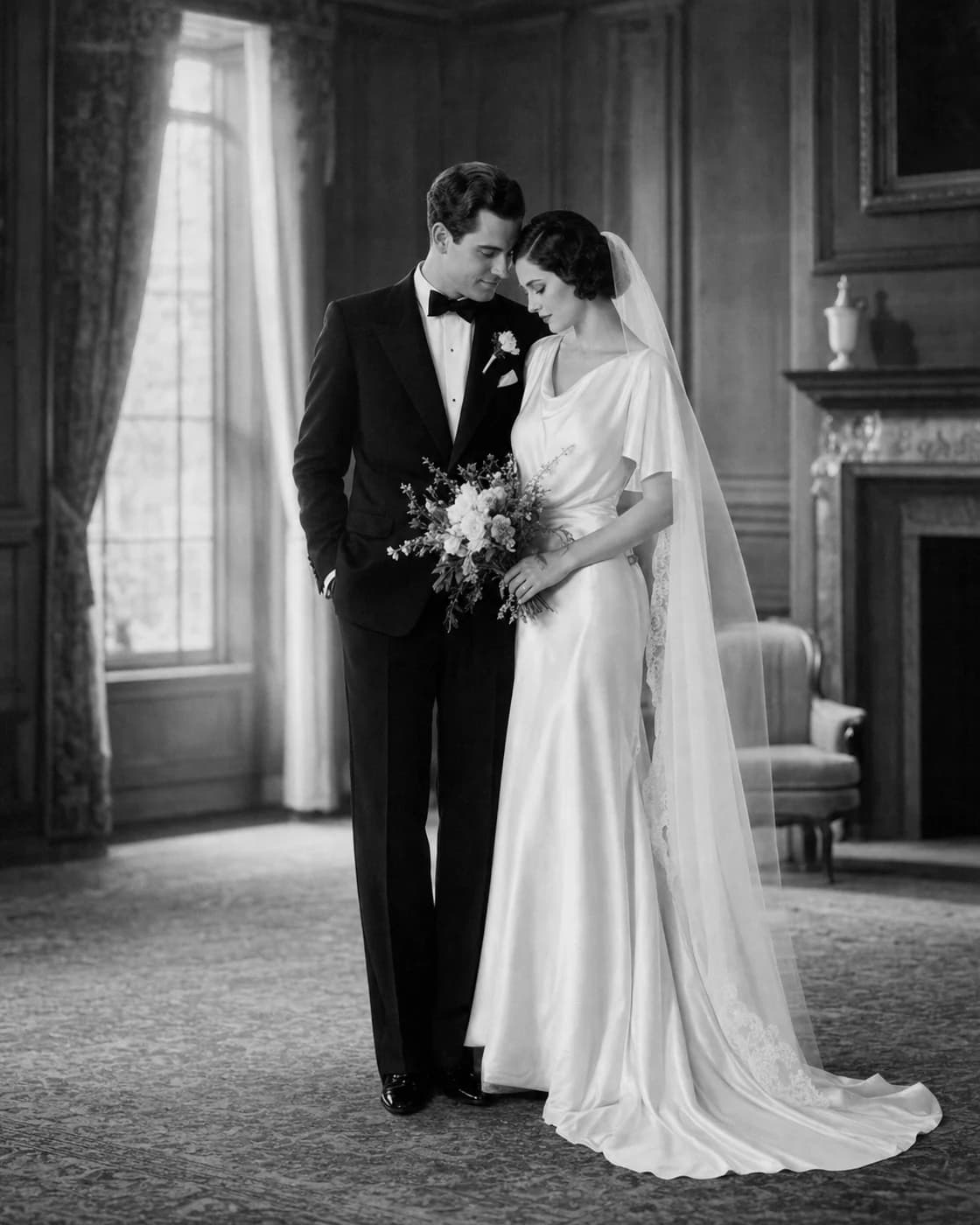
A wedding dress code is one short line, and it does two jobs: it tells guests how formal the day is, and it quietly tells them what to buy, borrow or pack. Below are all eleven dress codes defined precisely — what each one actually means to wear, whatever you are wearing it in — plus 40 lines you can copy straight onto your invitation, a quick-reference table, and the practical parts nobody covers: where the line goes, how to encourage a dress code without policing it, and what to say when guests ask.
How to read the descriptions below
Dress codes were written in an era that assumed one outfit per gender, which is why so many guides are hard to use. Everything below is described by garment rather than by who is wearing it: a tuxedo, a gown, a suit, a jumpsuit. Any guest may wear any of them, and national or cultural dress is correct at every level of formality — a sari, a kimono, a kilt, a xhubleta or a military uniform is always appropriate, and never needs to be mentioned as an exception.
Two conventions still hold almost everywhere. Guests avoid white, ivory, cream and champagne. And the formality of an evening reception is a notch above the same wedding held at noon. Everything else is yours to set.
Wedding dress codes at a glance
Find your row, then read the full definition below it. The third column is the one couples most often get wrong — the dress code belongs in a specific place, and putting it in the wrong one either buries it or makes the invitation read like a form.
| Dress code | What it means | Where to put it |
|---|---|---|
| White tie | Tailcoat and white bow tie; floor-length ball gown | Lower right corner of the invitation itself |
| Black tie | Tuxedo and black bow tie; floor-length or formal cocktail | Lower right corner, or the reception card |
| Black tie optional | Tuxedo welcome, dark suit equally correct | Details card, and repeated on the website |
| Formal | Dark suit and tie; floor-length or elegant midi | Details card |
| Cocktail | Suit; knee-length or midi dress, dressy jumpsuit | Details section, next to the venue |
| Semi-formal | Suit, tie for evening; midi dress or separates | Details section, with a venue hint |
| Dressy casual | Blazer and trousers, open collar; day dress | Details section, with an example |
| Smart casual | Collar and proper shoes; no trainers, no shorts | Details section — always with an example |
| Garden party | Light suits and florals; heels that survive grass | Details section, beside the ground-surface note |
| Beach formal | Linen suit, often no jacket; maxi dress; sandals | Travel or details page, with the weather note |
| Festive | Cocktail, plus velvet, sequins and jewel tones | Details section, with the base level named |
White tie
The most formal dress code that exists, and genuinely rare — state banquets, a handful of balls, and a small number of weddings each year. Do not use it unless your venue and schedule really carry it, because guests will need to hire.
What it means. A black tailcoat with matching trousers, a white piqué wing-collar shirt, a white waistcoat, a white bow tie and black patent shoes. Or a floor-length ball gown, ideally with some structure to it, and the best jewellery you own; long gloves are traditional and still look right. Nothing shorter than floor length, and no dinner jacket — a tuxedo is one full level down and reads as underdressed here.
How to word it
- “White tie”
- “White tie — tails and floor-length gowns”
Black tie
The formal standard for an evening wedding, and unambiguous in a way that almost no other dress code is. Conventionally it applies to weddings starting after five or six in the evening; a black tie wedding at eleven in the morning will confuse people, so if that is your plan, say so warmly and explain why.
What it means. A dinner jacket — black or midnight blue, with satin or grosgrain facings — worn with a black bow tie, a white dress shirt, and either a cummerbund or a low waistcoat instead of a belt. Black patent or highly polished shoes. Or a floor-length gown, or a formal cocktail-length dress, or an elegant tailored jumpsuit in a dressy fabric. Black is entirely correct, and for many guests it is the default.
How to word it
- “Black tie”
- “Black tie — we are dressing up, and we would love you to as well”
Black tie optional
Also written as “black tie invited” or “black tie preferred”. The most useful code in the formal range, because it gets you a formal-looking room without asking anyone to hire an outfit they will wear once.
What it means. A tuxedo if you own or want to wear one; otherwise a dark suit — charcoal, navy or black — with a white or pale shirt and a conservative tie. Or a floor-length gown, a formal midi, or a cocktail dress in a rich fabric. The room ends up mixed, which is the point: the guests who love to dress up do, and nobody else feels wrong.
How to word it
- “Black tie optional”
- “Black tie optional — tuxedos welcome, dark suits equally so”
Formal
“Formal attire” sits just below black tie optional and asks for the smartest thing already in a guest's wardrobe rather than anything hired. It suits hotel ballrooms, historic venues, cathedral ceremonies and evening receptions where you want elegance without the tuxedo question.
What it means. A dark suit, well fitted, with a tie. Or a floor-length dress, an elegant midi, or dressy separates in a considered fabric. The distinction from cocktail is length and depth of colour: formal leans longer and darker, cocktail leans shorter and brighter.
How to word it
- “Formal attire”
- “Formal — dark suits, long dresses, your best shoes”
Cocktail attire
The most common wedding dress code, and the safest default if you are unsure. It is smart enough for a beautiful venue and loose enough that most guests already own something that works.
What it means. A suit in any colour, with a shirt and usually a tie, and proper leather shoes. Or a knee-length or midi dress, a dressy jumpsuit, or elegant separates. Not a tuxedo, and not a floor-length ball gown — both read as a level too high. Lighter colours and lighter fabrics for a daytime wedding; deeper colours after dark.
How to word it
- “Cocktail attire”
- “Cocktail attire — suits and midi dresses, dancing shoes encouraged”
Semi-formal
Semi-formal, sometimes written as “dressy”, overlaps heavily with cocktail, and that is worth being honest about: two guests can read the same word and arrive a level apart. It works best when you attach it to something concrete.
What it means. A suit, with a tie for an evening wedding and tie optional at a daytime one. Or a midi dress, a smart skirt and blouse, or tailored separates. Lighter shades and lighter fabrics before six, darker after. Because the term is elastic, pair it with the venue: “semi-formal, in a hotel ballroom” lands higher than “semi-formal, in a barn”, and both are clearer than the label alone.
How to word it
- “Semi-formal”
- “Semi-formal — think a smart evening out, in a candlelit hall”
Dressy casual
The point at which the suit stops being compulsory. Right for restaurant weddings, town-hall ceremonies, small vineyard lunches and second celebrations.
What it means. Trousers or chinos with a blazer and an open collar; a tie if you like one, but nobody will notice its absence. Or a day dress, a skirt and blouse, or a smart jumpsuit. No jeans, no trainers, no shorts. Loafers or leather shoes rather than anything you would run in.
How to word it
- “Dressy casual”
- “Dressy casual — a blazer, a summer dress, no need for a tie”
Smart casual
The most misread dress code of them all, because “casual” is doing far too much work in it. Never use smart casual on its own — always attach an example, or you will get guests in suits standing next to guests in polo shirts.
What it means. A collar and proper shoes are the floor. Tailored trousers or very dark, unfaded denim if you have said denim is fine; a shirt, a knitted polo, or a light blazer. Or a day dress, jumpsuit, or trousers with a blouse. No trainers, no shorts, no beachwear, nothing with a slogan on it.
How to word it
- “Smart casual — no trainers, but no need for a suit”
- “Smart casual — shirt and chinos, or a summer dress and sandals”
Garden party
Not really a formality level so much as a formality plus a warning about the ground. Garden party covers lawn ceremonies, marquee receptions, orangeries and country-house weddings, and its whole purpose is to stop guests arriving in shoes that sink.
What it means. Cocktail formality, softened. Light or mid-tone suits, linen and cotton, florals and pastels; midi or maxi dresses; hats and fascinators are welcome and, at a British-style wedding, expected. Crucially: block heels, wedges or flats, because stiletto heels and lawns are incompatible. Bring a layer for when the sun drops.
How to word it
- “Garden party attire”
- “Garden party — florals, linen, and block heels for the lawn”
Beach formal
Elevated but breathable. Beach formal is the dress code that most needs a temperature and a surface attached to it, because a guest reading it in a northern winter has no idea what thirty-two degrees and sand actually require.
What it means. A linen or lightweight suit, frequently without the jacket, an open-collar shirt, and loafers, espadrilles or dressy sandals. Or a flowing maxi dress in a light fabric, a kaftan-style dress, or dressy separates. No tuxedo, no floor-sweeping ball gown, and no stiletto heels — they disappear into sand. Sunglasses and a hat are practical, not casual.
How to word it
- “Beach formal”
- “Beach formal — linen, light colours, and shoes you can cross sand in”
Festive attire
A seasonal instruction rather than a formality level, used for weddings in December and around New Year. On its own it tells guests almost nothing, so always name the base level it sits on.
What it means. Cocktail attire as the foundation, plus the seasonal wardrobe: velvet, sequins, satin, jewel tones, tartan, a bold tie or pocket square, metallics. A dark suit with a festive shirt or a velvet blazer; a sequinned midi or a deep green or burgundy dress. Warm layers for a winter church, which is invariably colder than guests expect.
How to word it
- “Festive cocktail attire”
- “Festive attire — cocktail dress, with velvet and sequins very welcome”
Eighteen more dress code lines to borrow
The twenty-two lines above are the neutral versions. These eighteen carry more voice — pick the group whose tone matches the rest of your invitation, and keep the register consistent with your invitation wording. A playful dress code line under a formal host line reads as a mistake rather than as charm.
Formal and traditional
- “Black tie requested”
- “The honour of your presence calls for black tie”
- “Formal attire — long dresses and dinner jackets”
- “Evening dress, please”
Warm and welcoming
- “Dress in whatever makes you feel wonderful”
- “Cocktail attire — comfortable enough to dance in”
- “We would love to see you in your Sunday best”
- “Come as you feel most yourself; we are simply glad you are here”
Light-hearted
- “Dress to impress — the photographer, mostly”
- “Smart enough for photographs, comfortable enough for the last song”
- “Cocktail attire. Ties optional, dancing compulsory”
- “Wear something you will not mind spilling prosecco on”
Practical and climate-aware
- “Cocktail attire — the ceremony is on grass, so please avoid thin heels”
- “Formal, and bring a warm layer; the church is stone and it holds the cold”
- “Semi-formal, with shoulders covered for the ceremony, please”
Destination and multi-event
- “Welcome dinner: smart casual. Wedding day: black tie optional”
- “Beach formal on Friday, garden party on Saturday — pack light, pack twice”
- “Mediterranean summer formal — linen, light colours, and a hat if you burn”
Where the dress code line goes
On a printed suite, the convention is settled. The dress code goes in the lower right corner of the invitation card for white tie and black tie, and on the details or reception enclosure card for everything else. It never appears in the middle of the ceremony wording, where it interrupts the sentence that is doing the actual inviting.
There is also an older convention worth knowing: on very traditional invitations the wording itself carried the formality. “Requests the honour of your presence” signalled a religious ceremony and a formal day; the dress code line was almost redundant. Very few guests read that signal now, which is why even the most traditional suites usually spell it out.
On a digital invitation, three rules make the difference:
- Give it its own line in the details section, near the venue and the schedule, not tucked at the bottom under the gift note. Guests scroll looking for practical information as a block.
- Use one wording everywhere. If the invitation says “black tie optional” and the website says “formal”, you have created the exact question you were trying to prevent.
- Attach it per event when there is more than one. A welcome dinner, a ceremony and a next-morning brunch usually need three different answers, and a single dress code line at the bottom cannot serve all three.
The other thing worth getting right at the same time is how each guest is greeted — the naming conventions in our guide to addressing wedding invitations cover who is included, which is the question guests ask immediately after “what do I wear?”
How to encourage a dress code without policing it
You cannot enforce a wedding dress code. Nobody is turned away at the door, and any wording stern enough to imply otherwise costs you more goodwill than it buys compliance. What you can do is make the right choice the easy one.
- Say it early. Guests who need to hire, shop or alter something need lead time. Put the formality on the save-the-date if you already know it — even just “black tie” or “a formal evening” — so the invitation confirms rather than surprises.
- Be specific rather than aspirational. “Elegant” is not a dress code. “Cocktail attire — midi dresses and suits” is. Every additional concrete noun raises the proportion of guests who land where you intended.
- Give the reason. “The ceremony is on grass” does more work than any amount of insistence, because it converts a rule into a piece of help. Guests follow help willingly and rules reluctantly.
- Let the front row set the tone. Ask your wedding party, parents and closest friends to dress firmly to the code. Guests calibrate off the people around them far more than off a line of text they read six weeks ago.
- Answer the edge cases before they are asked. Add one short note covering the two or three questions you know are coming — black, white, trousers instead of a dress, whether children follow the same code.
- Have a quiet contingency. A basket of pashminas by a cold church door, or a few pairs of flats near the dancefloor, fixes the handful of misjudged outfits without a single awkward conversation.
- Then let it go. Someone will arrive in the wrong thing. They came, which is the part that mattered. No guest has ever remembered a wedding for another guest's shoes.
Climate, venue and destination considerations
A dress code that ignores the weather gets ignored back. Guests will always choose being comfortable over being correct once they are standing in the sun at two in the afternoon, so build the conditions into the line itself.
| Condition | What it changes | Add this to the line |
|---|---|---|
| Ceremony on grass | Thin heels sink | “block heels or flats, please” |
| Sand or shingle | Heels are unusable | “sandals you can walk in” |
| Cobbled streets | Long walks between venues | “a short walk on cobbles” |
| Church or basilica | Shoulders and knees covered | “shoulders covered for the ceremony” |
| Stone interior | Cold, even in summer | “bring a wrap or a jacket” |
| Outdoor evening | Temperature drops at sunset | “a layer for after dark” |
| High summer heat | Jackets come off regardless | “jackets entirely optional” |
| Rain plan | Suede and silk suffer | “we move indoors if it rains” |
Destination weddings add a further constraint that couples routinely forget: luggage. A guest flying in for three days with hand baggage is choosing between your welcome dinner outfit and your wedding outfit. The generous move is to set one formal code for the wedding itself and keep everything around it genuinely relaxed, so a single smart outfit and a single casual one cover the whole weekend.
Say the temperature range, not the season — “around 30°C in the afternoon, cooler by the sea after nine” is packable; “summer in Puglia” is not. If guests are travelling to you, our guide to destination wedding invitations covers the travel, timing and multi-event information that has to sit alongside the dress code, and our invitation timeline covers how much notice all of it needs.
What to do when guests ask
However clear your line is, you will get questions — often from the same handful of people, and often at eleven at night. Write your answers once, put them where guests can find them, and reuse them verbatim.
| The question | A reply you can send as-is |
|---|---|
| “Can I wear black?” | “Absolutely — black is perfect for the evening.” |
| “Is white really off limits?” | “A white print on a colour is lovely; a fully white outfit we would rather save for the day itself.” |
| “Do I need a tuxedo?” | “Only if you would enjoy wearing one — a dark suit is completely right.” |
| “Can I wear a suit instead of a dress?” | “Wear whichever you feel best in — both are exactly right.” |
| “Is it outdoors?” | “Ceremony on the lawn, dinner inside — so flat or block heels are the sensible call.” |
| “What are the children wearing?” | “Whatever is smart and comfortable — nobody is checking, least of all us.” |
| “Does the dress code apply to the welcome drinks?” | “Not at all — Friday is completely relaxed, save it for Saturday.” |
| “I cannot manage heels — is that a problem?” | “Not remotely. Flats are a better idea than heels at this venue anyway.” |
Two principles run through all of those. Answer the question that was actually asked, not the etiquette behind it. And always answer generously — every one of these questions is a guest trying to get it right for you, which is worth rewarding.
Six dress code mistakes worth avoiding
- Two dress codes in circulation. The invitation, the website and a group chat drifting into three different wordings is the single most common cause of confusion. Pick one phrase and repeat it exactly.
- Using “smart casual” with no example. It is the widest term in the list and it will be interpreted from suits to shorts. Always anchor it.
- Setting a code the venue contradicts. Black tie at a beach ceremony at noon puts guests in an impossible position; they will follow the venue, not the card.
- Naming a colour palette for guests. Asking guests to wear specific colours turns an invitation into an assignment and a shopping bill. Suggest a tone at most — “autumn shades welcome” — and mean the “welcome”.
- Adding a stern warning. “No exceptions” or “guests not in black tie will not be admitted” reads badly, and it is not something you will act on anyway.
- Leaving it off entirely and hoping. Silence is itself a message, and guests read it as “roughly cocktail, probably”. If that is what you want, fine — but say it, and save eight people a fortnight of worrying.
Putting the dress code on a digital invitation
A printed invitation has to fit the dress code into a corner of a card, and once it is in a drawer nobody looks at it again. A digital invitation is a page, so the dress code can sit where guests actually look for it — in the details, beside the venue and the schedule, alongside the ground-surface note and the weather.
On Pressed Love that matters in a few practical ways. The invitation lives at a shareable link and a QR code, so the guest who cannot remember whether you said cocktail or formal can check on their phone on the morning itself rather than messaging you. Multi-day weddings can carry the schedule with each event described in its own words, which is the only clean way to say “smart casual on Friday, black tie optional on Saturday”. And on the Essential tier one invitation carries up to 20 of 29 languages, so a guest in Tirana and a guest in Munich can each switch the dress code — and the reason for it — in their own language, which is where most cross-border misunderstanding about formality actually comes from.
The tiers are one-time payments, not a subscription: €49 publishes the invitation with its shareable link and QR code, €175 adds RSVP tracking, a guest dashboard, per-guest WhatsApp, SMS and email links, the seating chart, planner and budget tools, and at €395 our team makes the invitation for you, with a painting of your venue, your monogram and the whole suite in one design. Designing and previewing cost nothing — you pay only when you publish.
If you want to see how the dress code line sits within a finished design, browse the template gallery, read the full wording guide for the lines above and below it, and start building at /create. It takes about the same time as choosing between “formal” and “black tie optional”, which — if you have read this far — you have probably been doing for a while.
Wedding dress code wording — FAQs
Where do you put the dress code on a wedding invitation?
On a traditional printed invitation the dress code goes in the lower right corner of the invitation card, or on the details or reception enclosure card — never in the middle of the ceremony wording. On a digital invitation it belongs in the details section, on its own line, close to the venue and the schedule. Wherever you put it, say it once, in one wording, and repeat that exact wording on your wedding website so guests never see two versions and have to guess which one counts.
What is the difference between black tie and black tie optional?
Black tie means a tuxedo or dinner jacket with a black bow tie, and a floor-length gown or a genuinely formal cocktail dress or jumpsuit. Black tie optional means the same thing is welcome, but a dark suit — charcoal, navy or black — with a tie is equally correct, and a formal midi or cocktail-length dress is fine alongside floor-length gowns. In practice, black tie optional tells guests that you would love the room to look formal, but nobody has to hire a tuxedo to attend.
What does cocktail attire mean for a wedding?
Cocktail attire is the most common wedding dress code and sits one step below black tie. It means a knee-length or midi dress, a dressy jumpsuit or elegant separates, or a suit in any colour with a shirt and usually a tie. Leather shoes rather than trainers, and no floor-length gowns or tuxedos — those read as overdressed for a cocktail wedding. Darker colours and richer fabrics for an evening reception, lighter ones for a daytime one.
Can wedding guests wear black or white?
Black is completely acceptable at a modern wedding and is the default for black tie and most evening receptions. White, ivory, cream and champagne are still best avoided, because they read as competing with the person wearing a wedding dress — and that convention has survived when almost every other guest-attire rule has softened. If you are relaxed about it, say so on your invitation, because guests will not assume it. A white floral print on a coloured background is generally fine.
How do you politely enforce a wedding dress code?
You cannot enforce it at the door, and you should not try. What actually works is being specific and early: name the dress code on the invitation, add one line explaining why — a cold stone church, a lawn ceremony, cobbled streets — and give a concrete example of what that looks like. Ask your wedding party and immediate family to dress to the code, because guests take their cue from the front row far more than from the invitation. Then let it go, and keep a basket of pashminas and a few pairs of flats by the door for anyone caught out.
What is the difference between semi-formal and dressy casual?
Semi-formal expects a suit, with a tie for an evening wedding, and a midi dress or dressy separates. Dressy casual drops the suit requirement: trousers or chinos with a blazer and an open collar are fine, as is a day dress or a skirt and blouse. The honest problem with both terms is that guests interpret them differently, so pair either one with a venue hint — "semi-formal, in a hotel ballroom" or "dressy casual, in a vineyard courtyard" — which tells people far more than the label alone.
What should guests wear to a beach or garden wedding?
For a beach wedding, think elevated but breathable: a linen or lightweight suit, often without a jacket, a flowing maxi dress, and shoes you can walk on sand in — dressy sandals or espadrilles rather than stilettos, which sink. For a garden wedding, dress for the ceremony formality but choose block heels, wedges or flats because lawns swallow thin heels, and bring a layer for when the temperature drops at sunset. Say the ground surface on the invitation; it changes what guests choose more than any dress-code label does.
Do you have to put a dress code on a wedding invitation?
No, it is optional. If you leave it off, guests will read the formality from the venue, the time of day and the wording of the invitation itself, and most will land somewhere near cocktail attire. The risk is a room that looks inconsistent and a handful of guests who quietly worry about it for weeks. If you genuinely do not mind, say that rather than staying silent — a line like "come as you feel most yourself" is a dress code too, and it stops the questions before they start.
Sobre el autor
Pressed Love Collective
Redacción
La redacción de Pressed Love. Escribimos sobre textos para invitaciones de boda, etiqueta y diseño, y los pequeños detalles que hacen que el día sea vuestro.